Most student portfolios are full of to-do apps and weather widgets — perfectly reasonable projects, but ones built for a résumé rather than for anyone who'd actually use them. Somewhere around my second year, I got tired of building things nobody needed.
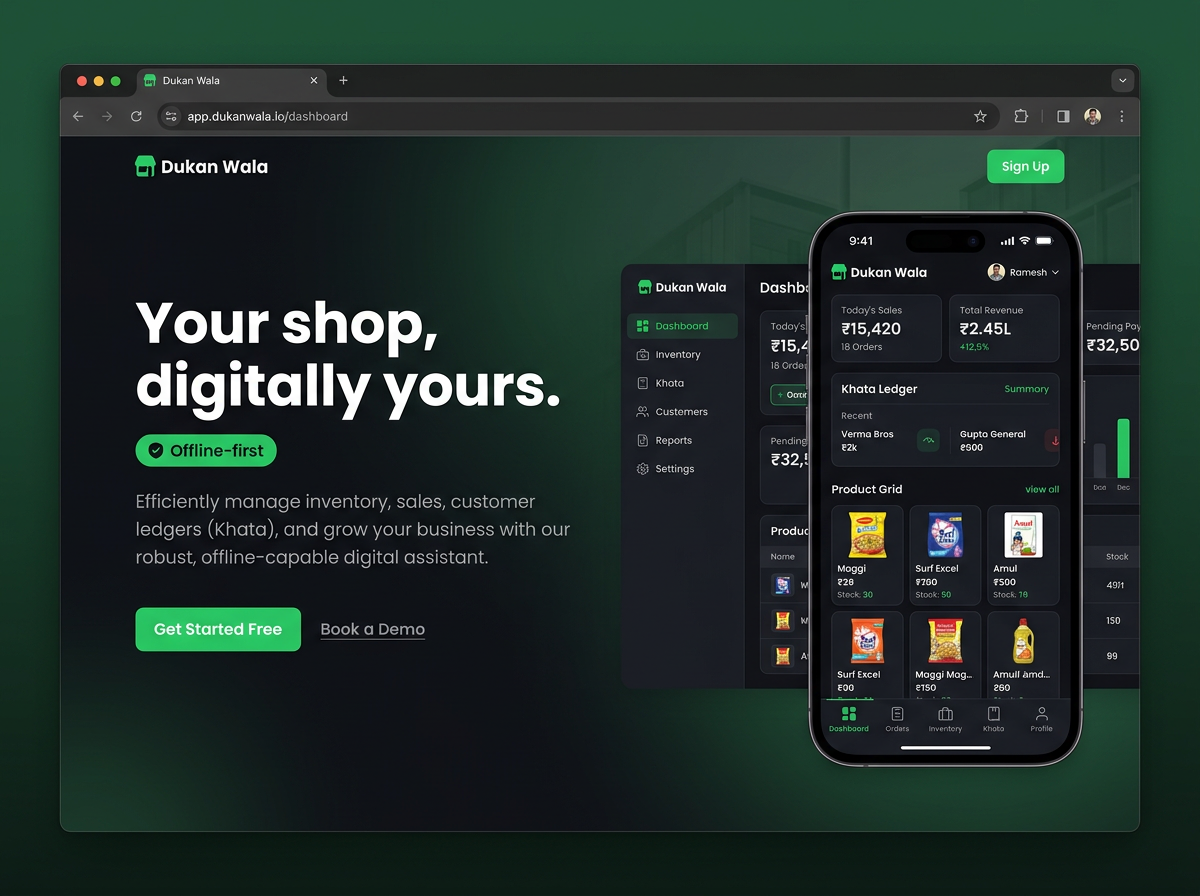
That's what led to Dudh Wala — a simple ledger app for village milk vendors — and later Dukan Wala, a full digital assistant for neighbourhood shopkeepers. Neither project came from a course assignment. They came from watching real people do real, repetitive work by hand, and wondering if a small piece of software could help.
The brief nobody gives you
When you build for yourself or for a grade, the requirements are whatever you decide they are. When you build for a shopkeeper who's never used anything more complex than a calculator, the requirements are set by them — and they're unforgiving. If an interface isn't obvious in three seconds, it's not going to get used, no matter how clever the code behind it is.
That constraint changed how I think about software entirely. I stopped asking "what can I build?" and started asking "what does this person actually need to stop doing by hand?"
The best interface isn't the one with the most features. It's the one the user forgets they're using.
What actually mattered
- Large, obvious touch targets — because these apps are used quickly, often one-handed, in the middle of serving a customer.
- Offline-first by default — because connectivity in these environments is never guaranteed.
- Zero jargon — every label had to make sense to someone who's never used a "dashboard" before.
Dukan Wala eventually grew into something more ambitious — a Khata Book ledger, smart billing, a Taraju calculator, voice-based product entry, and even an AI-powered marketing studio for generating festival posters. But every one of those features earned its place by solving something a real shopkeeper told me was actually annoying, not by chasing a feature checklist.
Why this matters for client work too
The habit of designing for the person who'll actually open the app — not the person reviewing my code — carried directly into paid client work like Khushi Jewellers. A luxury e-commerce platform and a milk vendor's ledger app have almost nothing in common on the surface, but the underlying discipline is identical: understand the real user, strip away anything that doesn't serve them, and measure success by whether the tool actually gets used.
That's the standard I try to hold every project to now, portfolio piece or not.